From the EUTR to the EUDR: Navigating the transition
.png?width=50&name=Image%20(2).png)
📌 Looking at a recent case where the compliance of timber introduced to the EU market has come into question, ESG researcher Rosaida Brahim assesses how the current penalty framework in place for such situations is expected to change with the upcoming EUDR implementation deadline.
The EU Timber Regulation (EUTR) applies to companies importing wood and wood products until December 30, 2026, which is when the regulation is being repealed and replaced by the EU Deforestation Regulation (EUDR).
In this article we look at a recent case where 375 tons of timber products suspected of having been obtained through illegal harvesting were seized, and what this means for companies getting ready for the EUDR.
From the EUTR to the EUDR: Navigating the transition
A case study on non-compliance
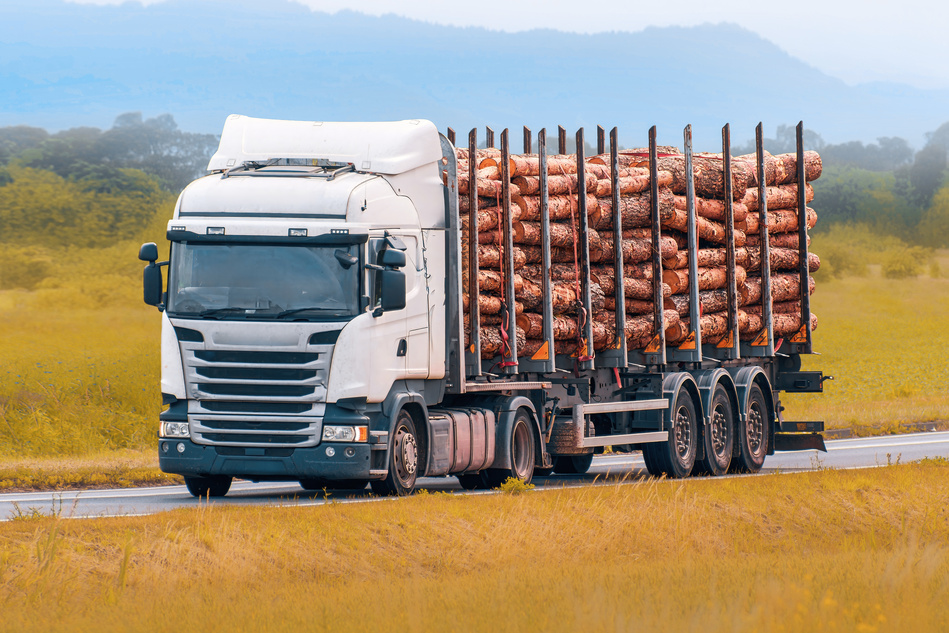
Dutch authorities recently seized two shipments of Gabonese azobé wood, amounting to around 375 tons, or 16 truck loads, of timber.
It is not illegal to import Azobé wood in itself , nor is it illegal to import wood from Gabon. The reason why the wood was seized was because it could not be verified whether it was sourced from legal logging activity.
Under the EU Timber Regulation (EUTR) businesses importing timber and timber products must be able to show documentation that the wood came from legally sanctioned timber harvesting.
The case, currently still under investigation, is an excellent example of how failure to meet compliance standards can be penalized. It is also a great opportunity to assess what will change when the EUTR is repealed on December 30 2026 and replaced with the EU Deforestation Regulation (EUDR).
EUTR versus the EUDR
The EU Timber Regulation (EUTR) was first implemented in 2013. Its main goal is to stop illegally harvested timber from entering the EU market, which in turn was supposed to reduce deforestation. However, the regulation has an important limitation: legally harvested timber is not necessarily deforestation-free.
For example, a country might have a very aggressively pro-agribusiness policy. This means that the source of their wood/wood products could still be legal, but it could still contribute to deforestation or forest degradation.
This is where the EU Deforestation Regulation (EUDR) goes a step further. From 30 December 2026, the EUDR is set to replace the EUTR, building on its existing legality requirements while introducing an additional obligation: relevant products must also be deforestation-free.
In other words, the EUDR does not replace the EU's commitment to tackling illegal logging. It strengthens it by addressing both the legality of timber harvesting and its environmental impact.
Attention: EUDR implementation deadlines
There are two deadlines for EUDR implementation: December 30, 2026 for large & medium enterprises and 30 June 2027 for small & micro enterprises.
If your business is currently subject to the EU Timber Regulation (EUTR), then it does not matter how big your company is. You are immediately subject to the EUDR on December 30, 2026.
It’s important to note that EUTR compliance does not equal EUDR readiness. Even businesses that have successfully complied with the EUTR the past decade are not automatically EUDR compliant come December 30. The EUDR is a regulation with a much larger scope and more substantial obligations regarding due diligence, traceability and reporting requirements.
If we were to compare the two directly:
| EUTR | EUDR | |
| Targets.... | Illegally harvested timber | Deforestation, forest degradation and illegal production |
| Has the following products and commodities in scope.... | Timber and Wood products |
Wood, coffee, soya, cattle, cocoa, oil palm, rubber -- plus a number of derived products (think chocolate, furniture, beef, etc.) |
| Demands compliance through.... | Operators maintain and apply a due diligence system, kept internally |
Geolocation of every plot of land where the commodity was produced, plus proof of deforestation-free status after the 31 December 2020 cut off date
|
| Requires a risk assessment... | For all imports |
For imports from standard and high risk countries; low risk countries do not require a full risk assessment or mitigation measures |
| Monitors compliance through | Internal documentation and filing |
Submission of a DDS for all commodities and products through the TRACES system. |
An odd little twist: Gabon provides an interesting example of how the two regulations differ.
Wood originating from Gabon is currently often scrutinized under the EUTR because Gabon has a significant issue with illegal logging. Yet, under the EUDR, Gabon is currently classified as a low-risk country.
This means that businesses sourcing wood from Gabon won’t have to carry out a full risk assessment or mitigation as part of their due diligence.
However, low risk does not mean no risk or no obligations. Businesses must still meet the EUDR's applicable legality, traceability and deforestation-free requirements.
Emphasis should be placed on currently, because the risk gradations are subject to review in the coming months, and Gabon's status might be affected.
New regulation, new penalties
This story of a company getting into trouble over azobé wood is not the first of its kind. In 2015, Dutch timber importer Fibois was flagged for bringing Cameroonian azobé wood with uncertain origins onto the EU market. The company received a warning and was given 6 months to take corrective measurements.
Fibois failed to do so, and were warned that another instance of non-compliance would result in a fine of € 1800 for every cubic meter of wood and/or wood products they placed on the market. Fibois contested the findings with the authorities, but the authorities upheld their ruling.
This case provides a good opportunity to compare what penalty systems are like under the EU Timber Regulation (EUTR) and what they will be like under the EU Deforestation Regulation (EUDR) after December 30, 2026. This is particularly relevant because weaknesses in EUTR enforcement were among the reasons for introducing such a strongly defined penalty framework under the EUDR.
Fines
Fines are already used to enforce the EUTR, but it is up to the Member States to determine how high the fines should be for companies that have been caught putting non-compliant products on the market.
The EUDR introduces stricter requirements for financial penalties. Member States must set the maximum fine at no less than 4% of the operator’s total annual EU-wide turnover in the financial year preceding the fining decision. Where necessary, fines must go high enough to exceed the economic benefit gained from the infringement.
This should ensure that companies don't think they can just eat the fine and still make a profit.
Confiscations
The article opened with the seizure of 375 tons of wood under the EUTR after its origin could not be clearly traced to legal harvesting.
Similarly, under the EUDR, non-compliant products can be confiscated. If any revenue was gained from the products prior to this confiscation, that revenue may also be confiscated.
Reputation
Under the EUTR, companies who were found guilty of bringing non-compliant wood and wood products onto the EU market received penalties, but their identities were rarely published.
The EUDR introduces greater transparency. Organizations who have been judged to have been non-compliant will have their information published on a list on The European Commission's website.
This can be a major blow to the reputation of the organization; on top of this, organizations will not be allowed to have access to public funding such as grants for up to a year after having been judged in violation of compliance.
The consequences of non-compliance therefore extend beyond financial penalties, potentially affecting a company's reputation, commercial opportunities and access to funding.
How can MasterSustainability.today help with your compliance journey
Businesses who have experience with the EU Timber Regulation (EUTR) know that compliance requires diligent data and supply chain management. They also know what is at stake if claims of compliance can't be backed by the necessary data.
The EU Deforestation Regulation (EUDR) is much more demanding than the EUTR, and the penalties for non-compliance are significantly harsher.
Looking for a solution that offers insight, efficiency and impact?
MasterSustainability.today supports organizations in the digitization of their EUDR process, from data collection and supply-chain collaboration to audit preparation and TRACES-navigation.
Request our brochure to see if our EUDR solution is the right fit for your compliance journey:
Sources:
EU Deforestation Regulation (Regulation EU 2023/1115)
EU Timber Regulation (EU/995/2010 )
Implementing regulation - EU - 2025/1093 - EN - EUR-Lex
Politie neemt 375 ton 'fout hout' in beslag
Fouthoutteam NVWA neemt 375 ton hout in beslag bij importeur
Politie en NVWA nemen 375 ton 'fout hout' in beslag bij houtimporteur | politie.nl
![The EUDR Due Diligence Statement (DDS) explained [Updated July 2026]](https://www.mastersustainability.today/hs-fs/hubfs/Adoption.jpg?height=500&name=Adoption.jpg)