The 8 best PPWR software tools to achieve compliance


📌In this article, ESG researcher Cristian Clinciu presents 8 PPWR software solutions, highlights their strengths and limitations, and shares practical pointers for selecting the right solution to achieve compliance.
The 8 best PPWR software tools for compliance teams
PPWR is reshaping how companies design, label, and report on packaging across the EU, with stricter rules on recyclability, reuse, and data transparency from 2025 onwards. As obligations expand (for example: recyclability assessments, EPR reporting and supplier data collection), PPWR software helps automate data flows, reduce manual errors, and stay audit‑ready at lower cost.
The top 8 PPWR software websites:
- MasterSustainability.today
- circularise.com
- traceone.com
- trackonline.com
- packintelx.com/ppwr/
- landbell-group.com/top_pics/ppwr-digital-tool/
- ppwrcheck.com/en
- psqr.eu/digital-product-passport/
1. Master Sustainability Today
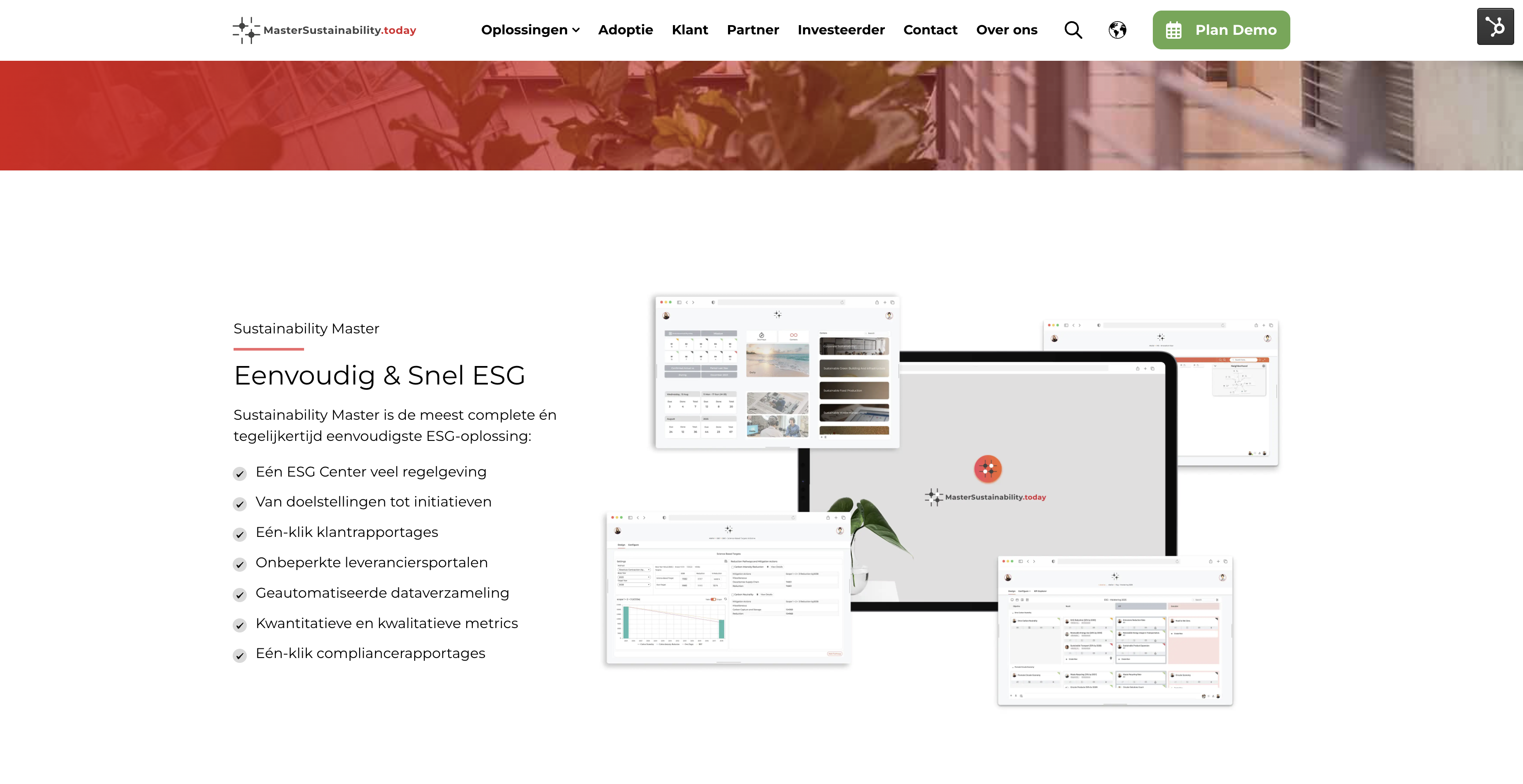
What it does: MasterSustainability.today centralises all packaging and ESG data so companies can maintain PPWR‑compliant packaging records, generate declarations of conformity, and link packaging data to broader sustainability reporting.
Website: www.mastersustainability.today
Best for: Companies that want to manage PPWR packaging compliance and wider ESG/CSRD obligations on a single platform rather than using separate tools.
Key features:
- Structured data model to track packaging formats, materials, weights, recycled content, and reuse KPIs for PPWR.
- Automated workflows that keep supplier and internal packaging records up to date.
- Dashboards and reports for PPWR documentation plus key ESG regulations.
Limitations:
- When using multiple integrations or ESG tools, these will become redundant.
2. Circularise
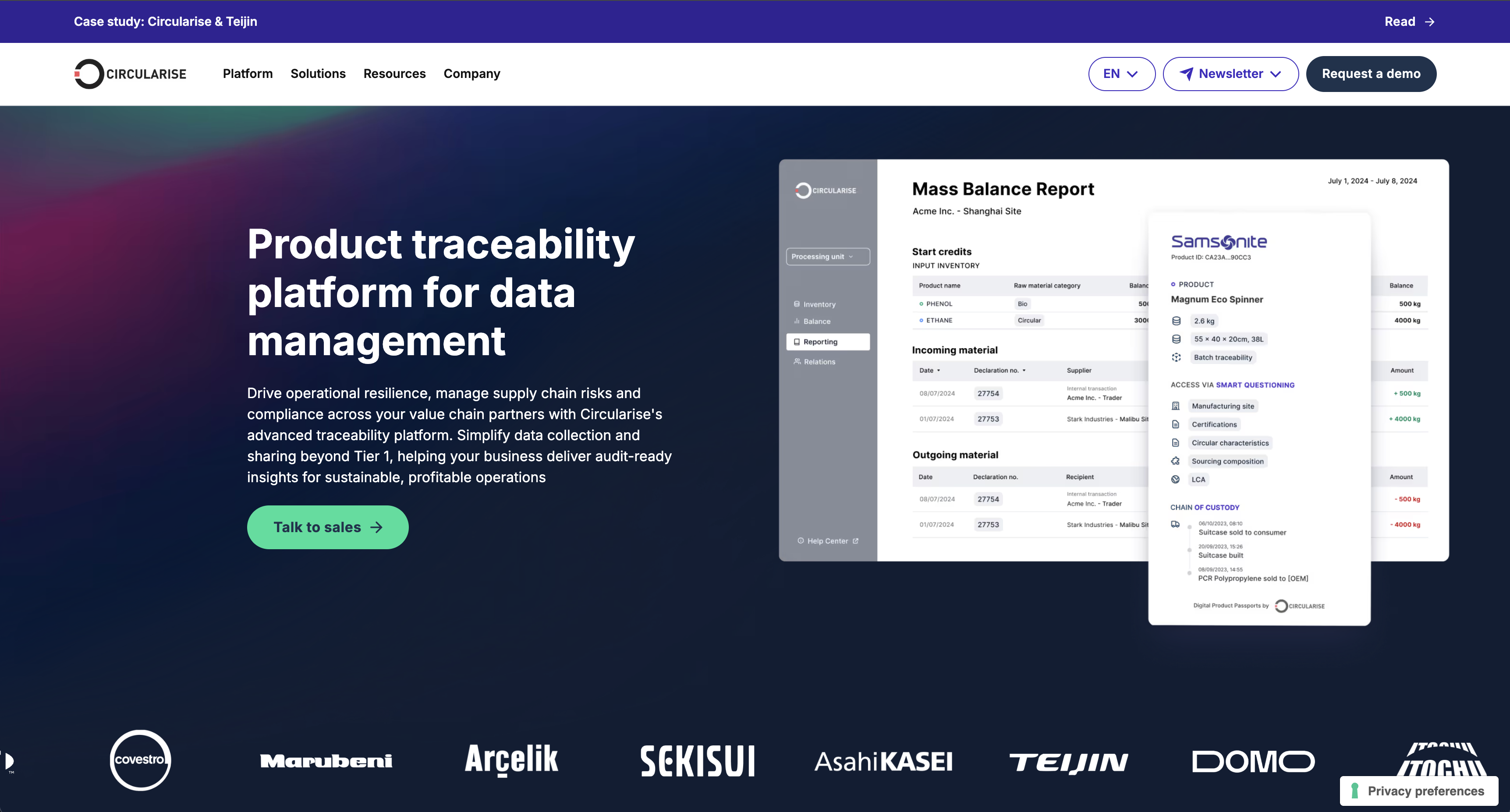
What it does: Circularise offers a traceability platform that creates digital records of materials and products across supply chains.
Website: www.circularise.com
Best for: Manufacturers and brand owners that need robust traceability of products.
Key Features:
- End‑to‑end traceability for materials and products across supply chains.
- Support for mass‑balance and recycled‑content claims relevant to EU rules.
- Secure data exchange so partners can share compliance data while protecting confidentiality.
Limitations:
- May be more extensive (and resource‑intensive) than needed for companies with simple packaging portfolios.
3. Trace One
What it does: Trace One offers product lifecycle management (PLM) software that centralizes supplier packaging data, helps assess recyclability and reuse, and supports EPR reporting and sustainability KPIs under PPWR.
Website: www.traceone.com
Best for: Retailers and private‑label brand owners needing an integrated PLM system that connects specifications, supplier data, and regulatory tracking.
Key features:
- Standardized, auditable collection of packaging data from suppliers.
- Tools to evaluate recyclability and design for reuse in line with PPWR requirements.
- Support for EPR reporting and sustainability performance indicators.
Limitations:
- As a full PLM platform, implementation can be more complex and time‑consuming than lighter‑weight point solutions
4. TrackOnline
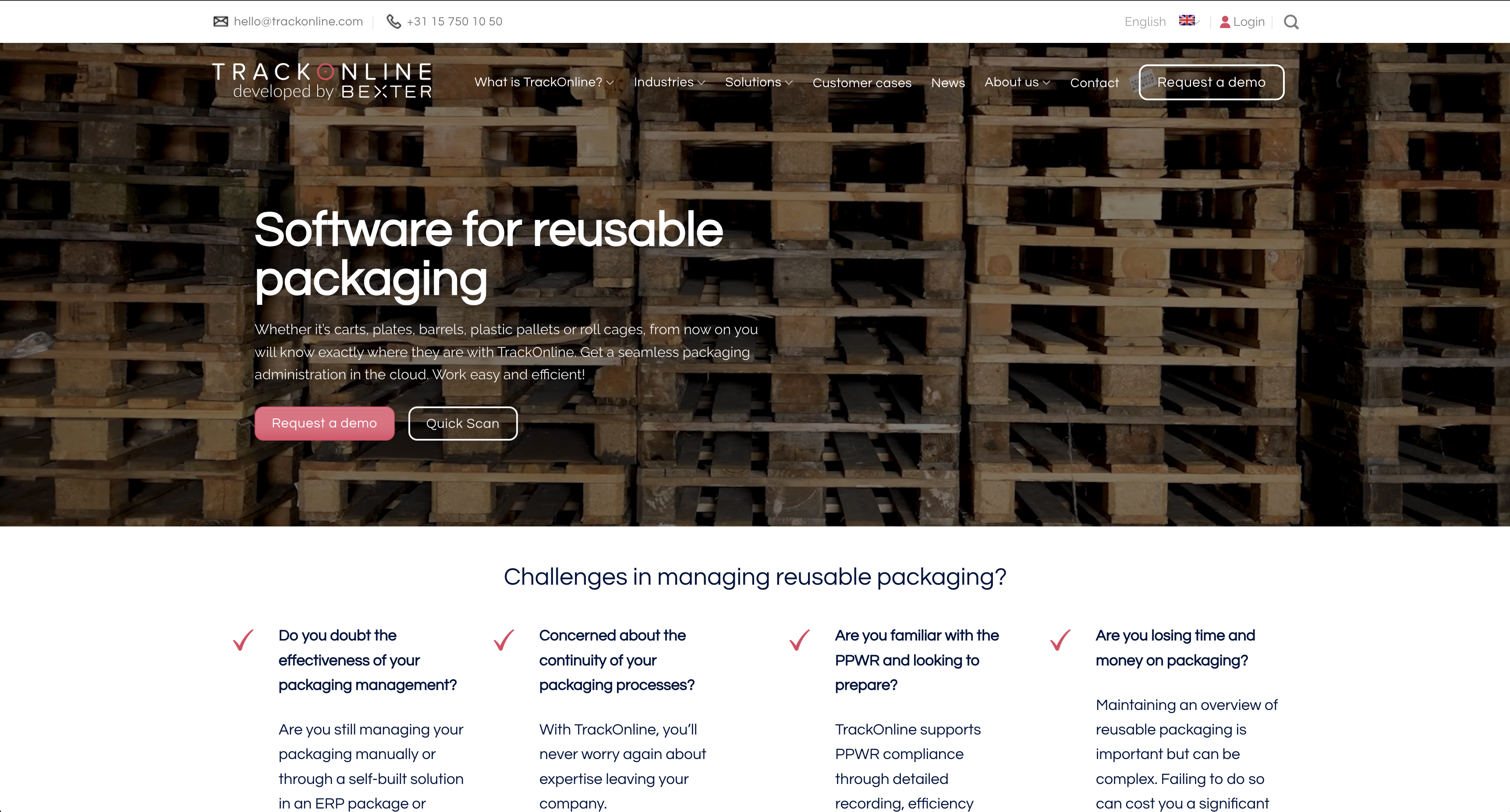
What it does: TrackOnline is a packaging registration system that gives real‑time visibility into packaging items and movements, which helps businesses comply with PPWR measures.
Website: www.trackonline.com
Best for: Logistics providers, pooling companies, and manufacturers that use reusable transport packaging.
Key features:
- Real‑time overview of packaging items (such as pallets, crates or other assets).
- Data to optimize reuse cycles and reduce unnecessary packaging use.
- Cloud‑based access for different actors in the logistics chain.
Limitations:
- Focused on packaging asset tracking; does not replace broader design‑for‑recyclability or labeling compliance tools.
5. PackIntelX
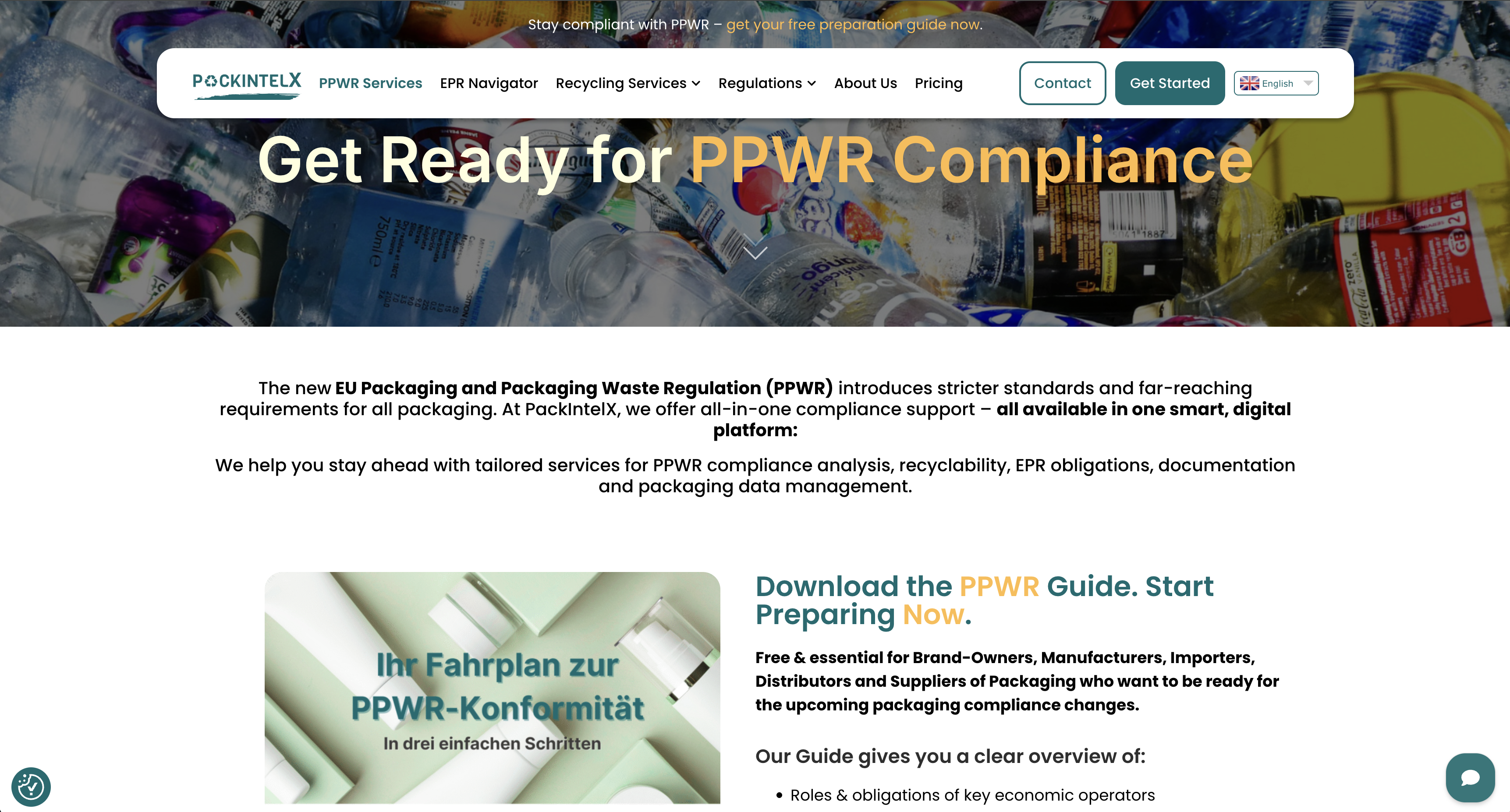
What it does: PackIntelX provides an all‑in‑one digital platform that analyzes how prepared a company is for PPWR and offers online assessments.
Website: www.packintelx.com/ppwr/
Best for: Companies seeking a structured PPWR readiness check and clarity on legal obligations.
Key features:
- Online PPWR analysis to benchmark current packaging against regulatory requirements.
- Clear identification of compliance gaps and recommended next steps.
- Tiered service levels (for example Essential vs. Advanced) to match company maturity.
Limitations:
- Diagnostic focus means ongoing operational capabilities may require integration with additional systems.
6. Landbell Group
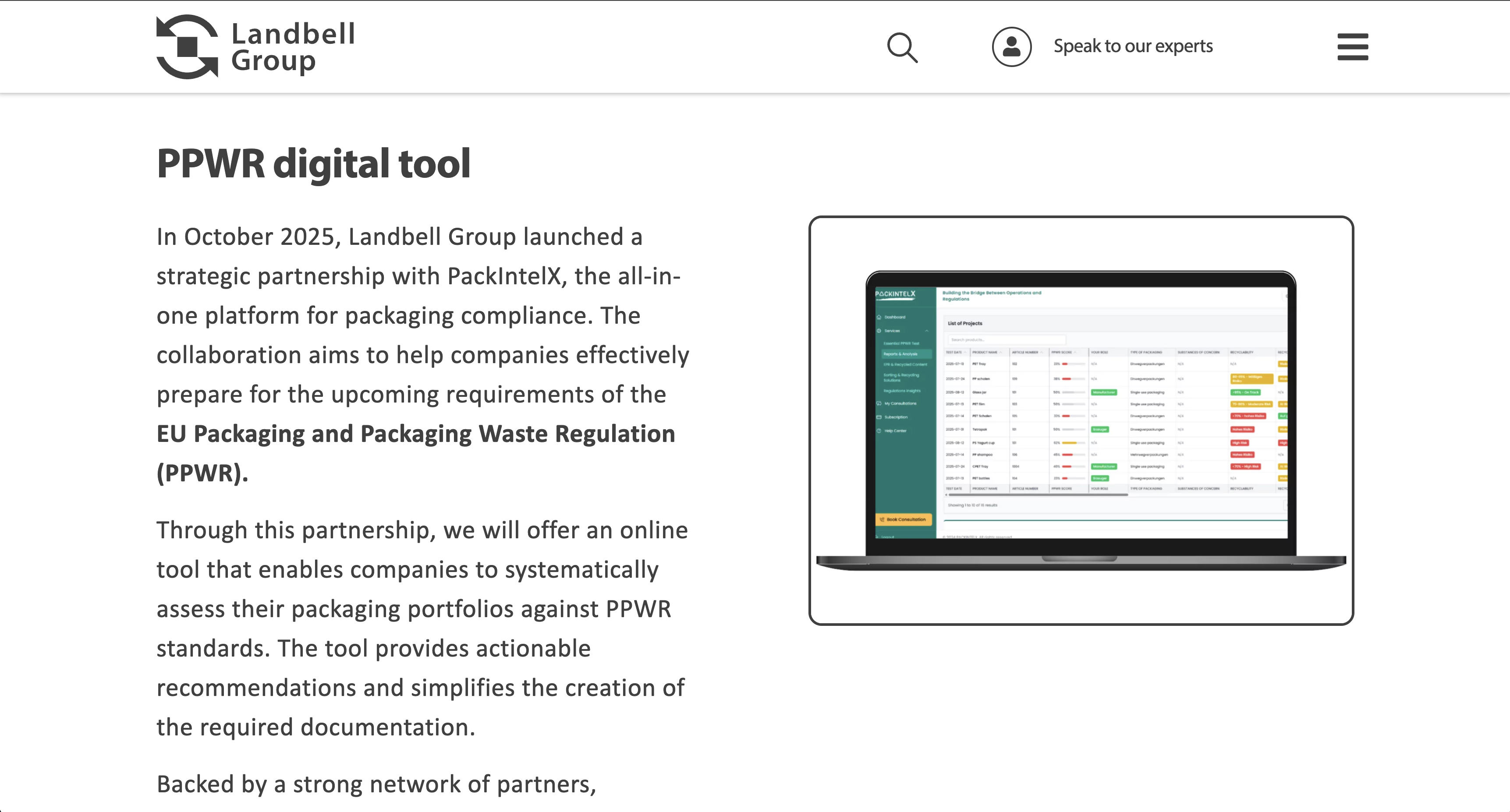
What it does: Landbell Group offers a PPWR digital tool in partnership with PackIntelX that enables companies to systematically analyze their packaging portfolios against PPWR requirements.
Website: www.landbell-group.com/top_pics/ppwr-digital-tool/
Best for: Multinational producers and importers that want PPWR tooling combined with broader expertise.
Key features:
- Online analysis of packaging portfolios versus PPWR criteria.
- Concrete recommendations for action and optimization of packaging.
- Support for documentation and preparation for regulatory checks.
Limitations:
- May be better suited to larger organizations; smaller firms may find the full-service package more than they need.
7.PPWR Check
What it does: PPWR Check is a web‑based tool that allows users to quickly verify packaging against PPWR requirements.
Website: www.ppwrcheck.com/en
Best for: Packaging teams and SMEs needing a fast, self‑service PPWR compliance check without implementing a large enterprise system.
Key features:
- Quick online verification of packaging against EU PPWR rules.
- Focus on speed and ease of use to give immediate guidance to teams.
- Plans to integrate certificates and AI‑based question‑and‑answer support.
Limitations:
- As a relatively new tool, some advanced features (such as integrations and full reporting suites) are still “coming soon.”
8. PSQR
What it does: PSQR offers a modular solution that manages product data throughout its lifecycle, supporting EU requirements on transparency, traceability, and circularity.
Website: www.psqr.eu/digital-product-passport/
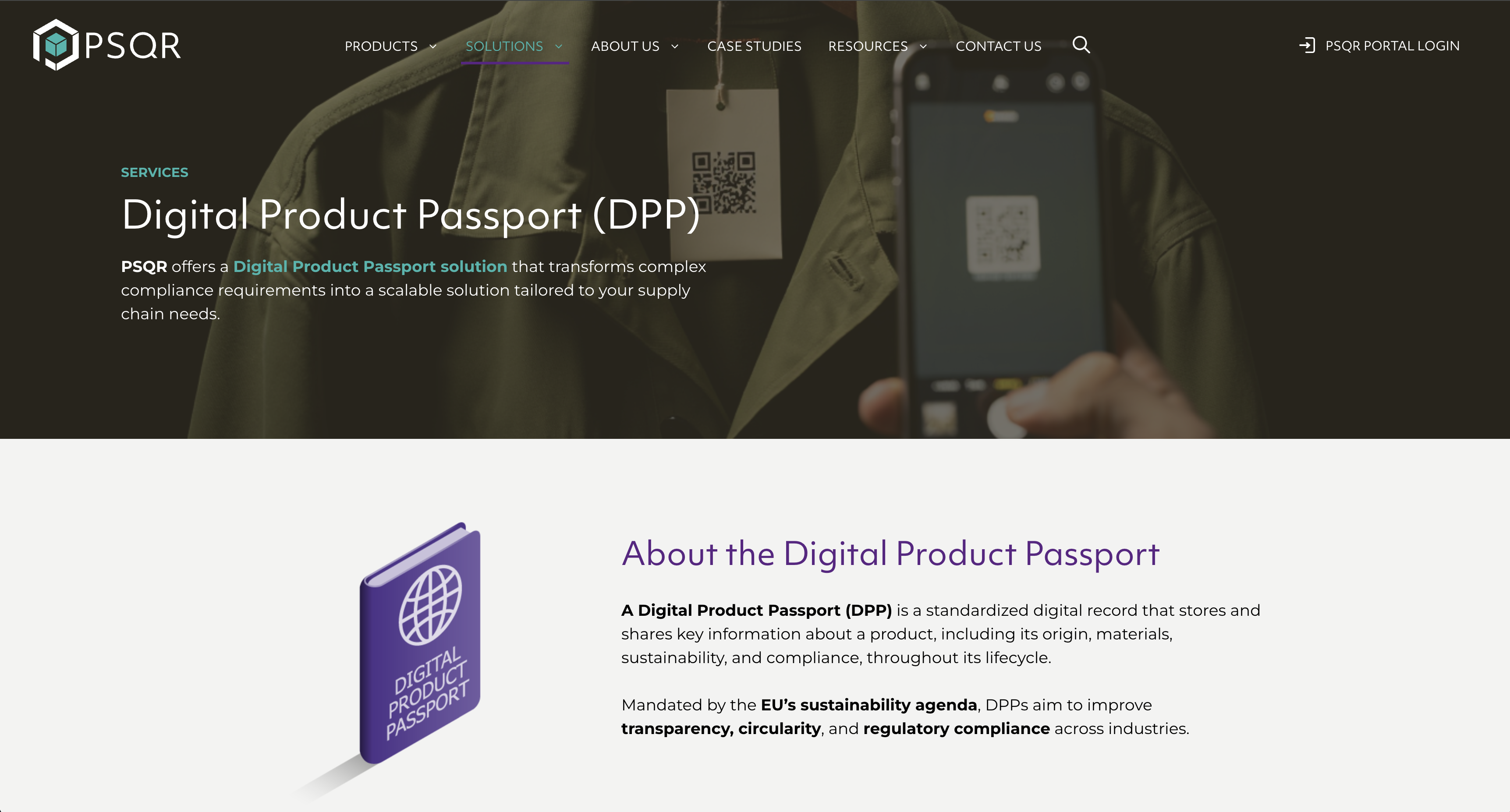
Best for: Manufacturers that want to future‑proof their packaging and product data infrastructure, linking PPWR with the Digital Product Passport.
Key Features:
- Central management of product and packaging data, including DPP‑relevant attributes.
- QR‑code generation compliant with GS1 Digital Link for consumer and value‑chain transparency.
- Integration with ERP, PIM and manufacturing systems for scalable data flows.
Limitations:
- Focused on DPP and broader product data; may need configuration and governance effort to tailor to PPWR packaging metrics.
What to look for when choosing PPWR tools
(1) Integration and scalability
When evaluating PPWR tools, assess how well they integrate with existing systems such as ERP, PLM, EPR reporting, and ESG platforms. That is because fragmented data flows quickly become unmanageable under the detailed packaging data requirements.
Additionally, check for scalability across countries and product lines, because PPWR applies EU‑wide and interacts with national EPR schemes and related rules.
(2) Regulatory- and cost alignment
Regulatory alignment is critical: favor vendors that actively track PPWR delegated acts and future milestones and update their platforms accordingly. Also compare cost models, vendor support, and user interface usability, as these directly influence adoption by packaging, sourcing, and sustainability teams.
Need help selecting a PPWR tool?
Selecting the right PPWR software solution depends on your product portfolio, existing systems, and risk profile. Many organizations benefit from an independent view on requirements and options.
If you would like support in mapping your PPWR obligations, defining requirements, or shortlisting vendors, get in touch to discuss your specific use‑case and explore which of these tools best fits your roadmap.
.png?width=50&name=Image%20(2).png)